
Is roof decking covered by insurance? Why it's included in some claims and not others
Two homeowners on the same street file storm claims in the same week. Both get a full roof replacement approved. One of them also gets every sheet of decking paid for. The other gets a bill from their contractor for $1,800 in plywood.
Nothing went wrong in either claim. The two houses simply triggered different obligations.
Decking — the plywood, OSB, or plank boards your shingles are nailed to — is one of the most misunderstood line items in a roof claim, because it sits in a category all its own. It isn't automatically included when a roof is approved, and it isn't automatically excluded either. Whether your carrier pays for it comes down to a single question, asked three different ways.
The one rule underneath all of it
An insurance policy does not pay to bring your house up to good condition. It pays to repair damage caused by a peril the policy covers.
That distinction is the whole article. A roof gets approved because wind or hail damaged the shingles. The shingles are the damaged property. The decking underneath is a separate component, and it only enters the claim if one of the following is true:
- The covered peril damaged the decking directly.
- A building code makes replacing or upgrading the decking a required part of the covered repair — and your policy has code-upgrade coverage to fund it.
- Damage tied to the covered loss is discovered once the shingles come off, documented, and submitted as a supplement.
If none of those three apply, the decking is a maintenance item. Old, rotted, delaminated, or sagging sheathing is a condition of the house, not a loss event — and conditions are the homeowner's responsibility. That's not a carrier being difficult. It's the same reason your policy replaced the shingles a hailstorm destroyed but wouldn't have replaced them for being twenty-two years old.
Let's take the three paths one at a time.
Path 1: The peril damaged the decking directly
This is the cleanest and least-argued route. Something covered by your policy physically damaged the deck, and the damage is visible and traceable.
Clear examples:
- A tree or large limb comes through the roof. The impact broke rafters and sheathing. The decking is damaged property, full stop.
- Wind tears shingles off and creates an opening in the roof, and water enters through that opening. Water that enters through a storm-created opening is generally covered, while long-term leaks are not — and the deck at that opening is part of what got wet.
- Hail large enough to fracture the sheathing itself, which is uncommon but does happen on thin or already-compromised decks.
- Fire, or firefighting operations, that damaged the deck.
The key phrase is direct relationship to the loss. An adjuster reviewing a tree-impact claim is not going to argue about the four sheets of plywood under the strike zone. The argument starts when the damage isn't visible from the roof surface — which brings us to the path most homeowners actually end up on.
Path 2: Code upgrade — when replacing the decking is required, not optional
This is the path that catches people off guard, because the deck may be structurally fine and still not be a legal nailing surface for new shingles.
Why code enters a roof claim at all
Once the old roof comes off, the new roof has to be installed to the currently adopted code and to the shingle manufacturer's instructions — not to the standard that applied when the house was built. Under the International Residential Code, asphalt shingles must be fastened to solidly sheathed decks (2021 IRC §R905.2.1). The code defines a roof replacement as removing all existing layers down to the roof deck (§R908.3), and it prohibits installing a new covering over an old one where "the existing roof or roof covering is water-soaked or has deteriorated to the point that the existing roof or roof covering is not adequate as a base for additional roofing" (§R908.3.1.1).
Notably, the IRC requires a "solidly sheathed" deck but never defines the term. That gap is where most decking disputes are actually decided.
Gap board and plank decking
Homes built before plywood sheathing became standard were commonly decked with 1x6 or 1x8 boards spaced apart — sometimes an inch or more between them. That was correct construction for wood shake or slate, which were nailed to battens. It's a problem for asphalt shingles, because a nail that lands in a gap holds nothing.
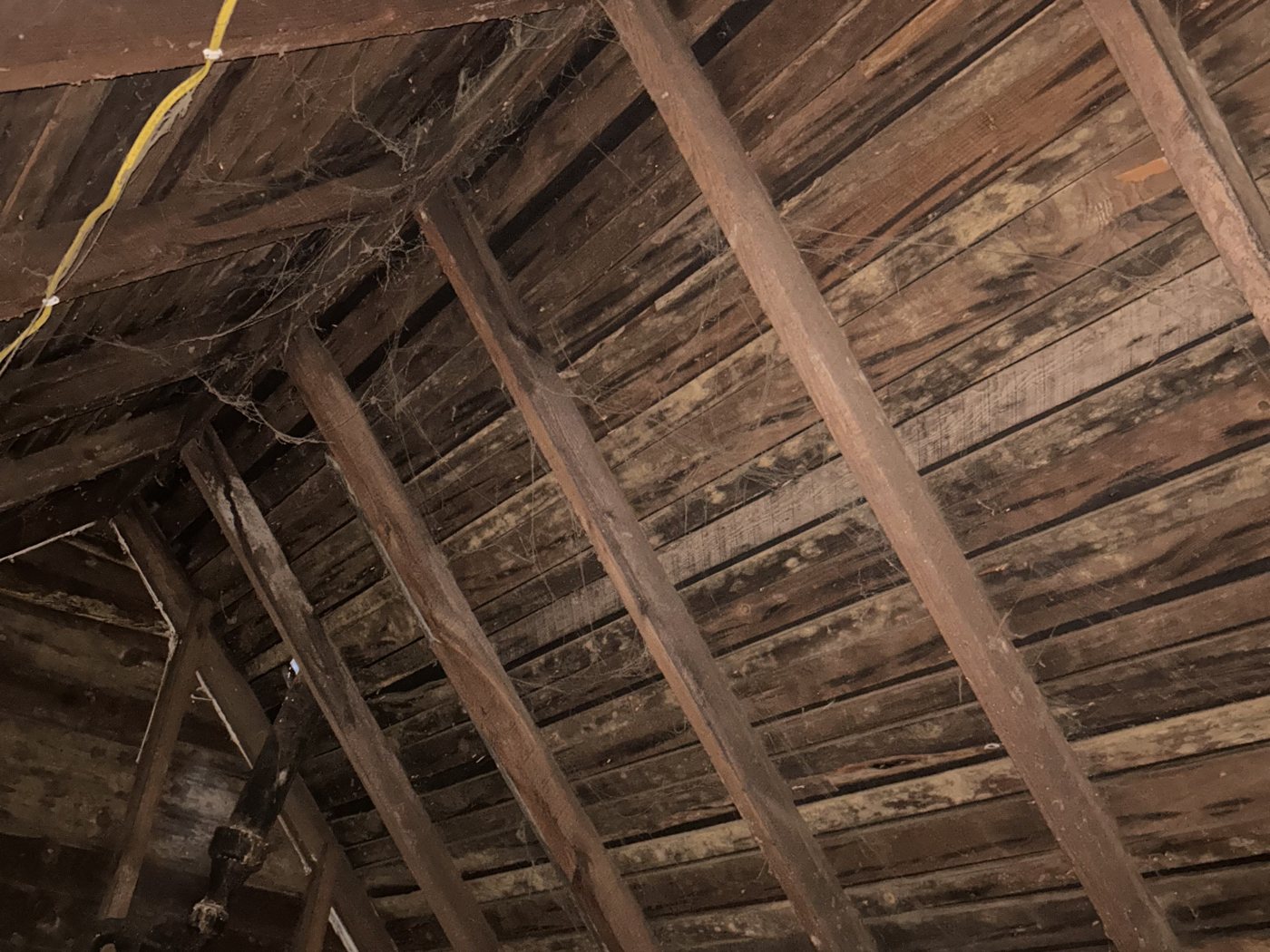
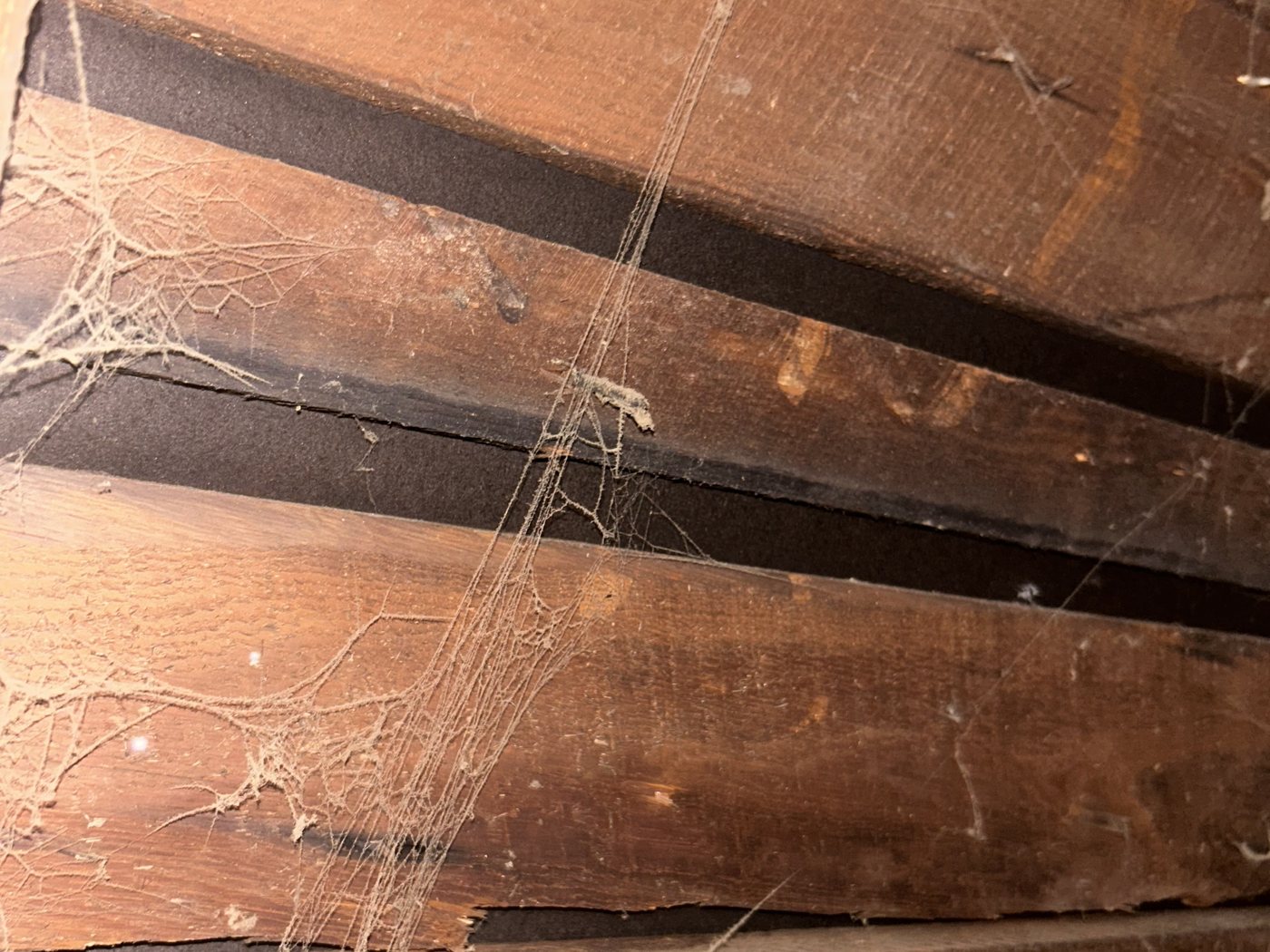
Manufacturer requirements are where this gets specific and measurable. Owens Corning, for example, permits spaced deck boards only if they are a minimum 6 inches wide, minimum 3/4 inch thick, with a maximum 1/4 inch space between boards — and states that holes or gaps greater than 1/4 inch must be repaired or the boards replaced. For solid decks, the published minimums are 3/8 inch plywood or 7/16 inch OSB, APA-rated. Other major manufacturers publish comparable numbers. Check the instructions for the specific shingle going on your roof.
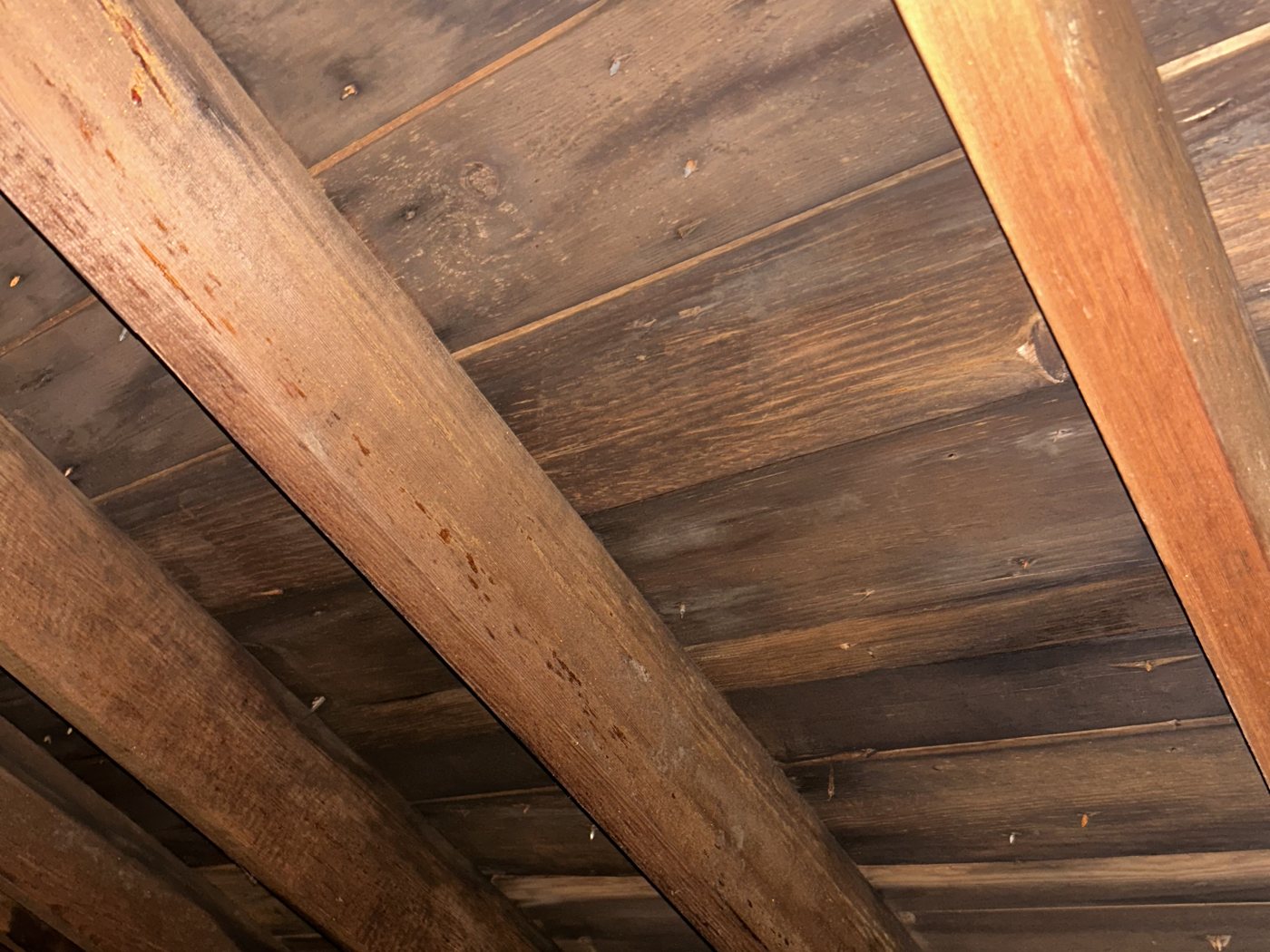
Board decking is not automatically a problem. Plenty of older homes have tight plank decking with no meaningful gaps at all, and it passes:
A 2026 formal code interpretation from the City of Springfield, Missouri is a useful illustration of how a building department reasons through this. It concludes that "an existing roof deck is considered solidly sheathed when it remains structurally sound, provides adequate fastening support for the intended roof covering, and complies with the manufacturer of the roof covering installation instructions." Elsewhere it states directly that existing board sheathing, plank decking, or panel sheathing meeting its criteria may remain in service without requiring complete replacement solely because it does not meet current standards for new construction — but that where the deck doesn't comply, "repairs, replacement, or other approved methods of mitigation shall be provided as necessary to achieve compliance."
That's one municipality's interpretive document, not a national rule, and it isn't binding anywhere but Springfield. But the logic tracks what most inspectors apply: the trigger isn't the age or type of your decking — it's whether it fails the manufacturer's gap and condition limits, or the currently adopted code. Tight planks stay. Wide-gapped skip sheathing gets overlaid with new sheathing or replaced. That's not the contractor upselling you; it's the permit.
Other code triggers worth knowing
- Sheathing thickness. A deck that met code decades ago may be below the minimum for the current code or the shingle warranty. Adjusters routinely omit the difference between 7/16" and 1/2" OSB unless it's supplemented with the code citation.
- Deck re-nailing. Some jurisdictions require the existing deck to be re-fastened to a specified nail size and pattern at every full replacement. Florida is the best-known example — see FBC-Existing Building §706.7.1 for roof-deck attachment and §706.7.2 for a secondary water barrier.
- Repair-versus-replace thresholds. Florida's "25% rule" (FBC-EB §706.1.1) historically forced a full replacement when more than 25% of a roof section was repaired in a 12-month period. Two updates matter: Senate Bill 4-D (2022) added Fla. Stat. §553.844(5), exempting roofs built, repaired, or replaced under the 2007 Florida Building Code or later — a March 1, 2009 threshold — so only the repaired portion has to meet current code; and the 8th Edition FBC (effective December 31, 2023) revised §706.1.1 itself. Rules like this vary enormously by state and get amended often. Check what your jurisdiction has actually adopted rather than what a blog said three years ago.
The coverage that funds it: Ordinance or Law
Here's the part that decides the outcome, and it's the thing most homeowners have never looked at.
Code-required upgrades are treated as betterment — you're getting something better than what you had — so they sit outside the basic promise to repair damaged property. They're funded by a separate provision usually called Ordinance or Law or Building Code Upgrade coverage.
The good news is that you may already have some. The standard ISO HO-3 form that most homeowners policies are modeled on includes a built-in Ordinance or Law additional coverage of 10% of your Coverage A dwelling limit. On a $400,000 dwelling limit, that's $40,000 available for code-driven costs — usually far more than decking will ever cost.
The complications:
- Endorsements raise it. Carriers commonly sell increased limits. United Policyholders notes these are typically written as 10%, 25%, or 30% of Coverage A.
- Some proprietary forms reduce or delete it. Not every policy is an ISO form. Carrier-specific forms — particularly in Florida and Texas — sometimes cut the code coverage back or remove it entirely. This is exactly why the declarations page matters more than the general rule.
- It only attaches to covered damage. The coverage applies to the increased cost of repairing "that part of a covered building... damaged by a Peril Insured Against." If your decking has to come out purely because it's rotted, and the rot wasn't caused by a covered peril, the code coverage doesn't rescue you — rot is excluded on its own, so there's no covered damage for the code coverage to attach to.
Path 3: Discovered at tear-off — the supplement
Most decking disputes happen here, and for a structural reason: nobody can see the top of the deck through the shingles.
Not the adjuster on the roof. Not a drone. Not an aerial measurement report. The first honest look anyone gets is the moment the old roof is stripped — and by then the initial estimate is already written and the claim is already approved at a number.
So the situation plays out like this. Wind lifted a section of shingles on the north slope. The adjuster approved the replacement. On tear-off day the crew pulls that section and finds the sheathing underneath is dark, soft, and delaminating — water got in through the storm damage and sat there. That decking was damaged by the covered peril. It just wasn't visible when the estimate was written.
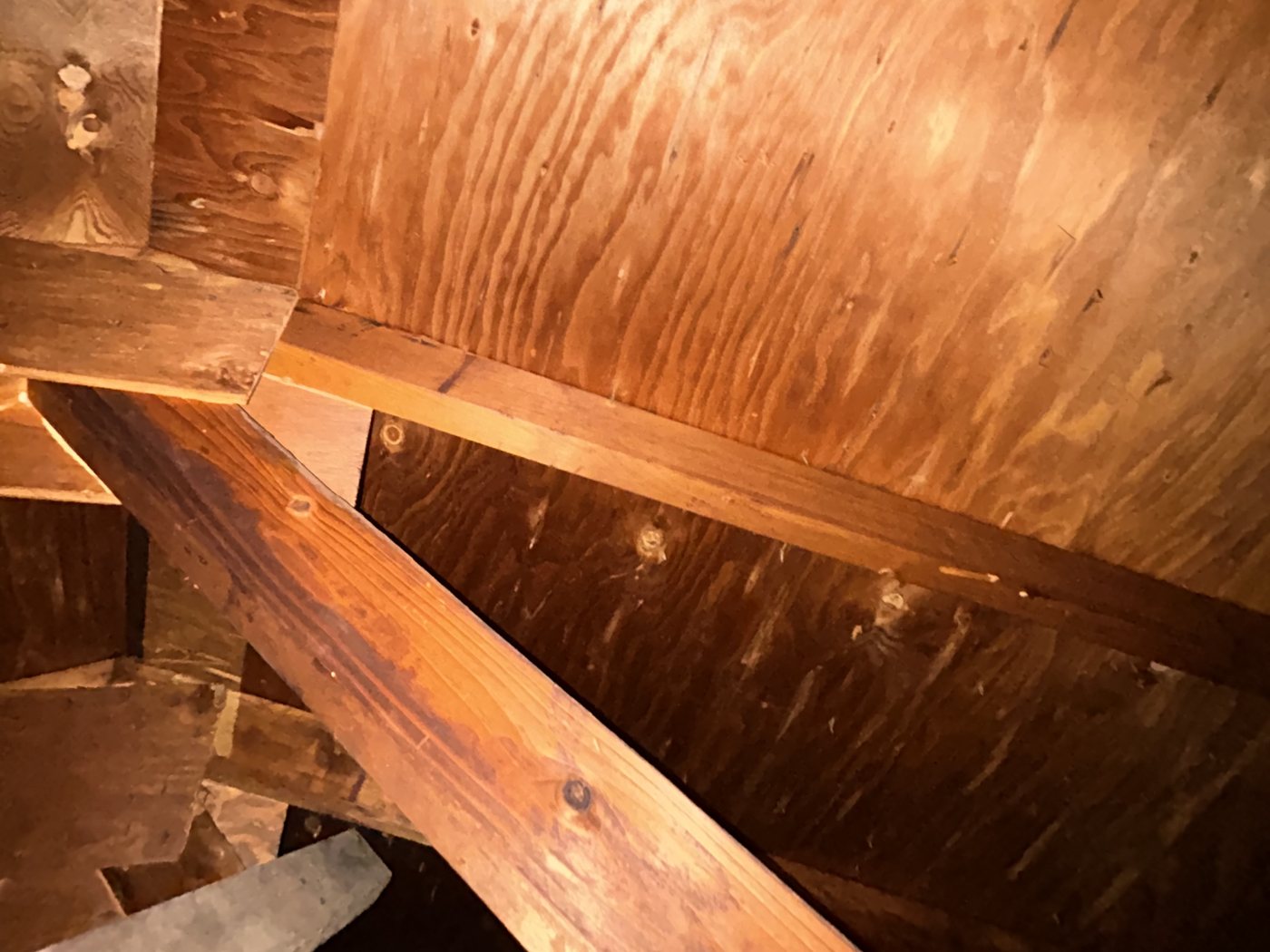
That is what a supplement is for: a request to add scope to an already-approved claim based on conditions discovered during the work.
What makes a decking supplement get approved
Carriers approve supplements that are documented and deny supplements that are asserted. The difference is almost entirely in what's captured on tear-off day.
- Photographs during tear-off, not after. Once new sheathing is down, the evidence is gone. The photos have to show the damaged decking in place, before replacement.
- Photos that establish location. Wide shots that tie the damaged decking to the same slope, same elevation, and same area as the approved storm damage. The whole argument is the direct relationship — the photos have to show it.
- A scale reference in the frame. A tape measure, a square, anything that lets a desk adjuster judge the extent.
- A count and a measurement. Number of sheets, square footage, thickness, and existing deck type.
- A cover letter with citations. The strongest supplements state the specific reason for each line item and cite the code section or manufacturer specification behind it. Supplements backed by code citations get approved faster and argued with less.
How and when you actually get the money
This is where expectations tend to break down. An approved decking supplement is generally not paid up front. The typical sequence:
- The roof is torn off; damaged decking is documented and replaced.
- The supplement is submitted with photos, measurements, and citations.
- The carrier reviews — approving fully, approving partially, or asking for more documentation.
- Approved amounts are added to the claim and released after the work is completed and documented.
On an actual cash value settlement, you're recovering nothing beyond the depreciated amount. On a replacement cost policy, the recoverable depreciation is released once you show the work was done. Either way, the homeowner or contractor is fronting the decking cost and getting reimbursed on the back end. Nobody enjoys this part, but knowing it in advance is much better than discovering it on invoice day.
What is almost never covered
For completeness, these are the decking conditions that get denied consistently, and why:
| Condition found at tear-off | Typical outcome | Reason |
|---|---|---|
| Rot from a long-term, pre-existing leak | Denied | Wear, deterioration, and rot are excluded; no covered peril |
| Delamination from age or ventilation problems | Denied | Maintenance condition, not a loss |
| Animal or insect damage to sheathing | Usually denied | Commonly excluded on standard forms |
| Sagging between rafters | Denied | Structural/age condition |
| Gap board decking, little or no code-upgrade coverage | Homeowner pays the difference | Code-required upgrade with nothing to fund it |
| Water damage at the point of storm damage | Often approved with a supplement | Direct tie to the covered peril |
| Impact damage from a tree or debris | Approved | Direct physical damage from the peril |
There is one narrow additional coverage worth knowing about: standard forms include a Collapse additional coverage that can respond to decay "hidden from view," but only if the decay was unknown to the insured before the collapse, and only where an actual collapse condition exists. It's a real provision and occasionally relevant. It is not a general remedy for an aging deck.
What to do before your roof comes off
Three things, and none of them take long.
1. Pull your declarations page and look for three items. Whether "Ordinance or Law" or "Building Code Upgrade" coverage appears, and at what percentage — don't assume the 10% is there, and don't assume it's all you have. Whether the roof is settled at actual cash value or replacement cost. And your deductible. Those three lines determine most of what happens if decking turns up.
2. Get the decking number in writing in your contract. Before signing, ask two questions: what is the per-sheet or per-square-foot price for replacement decking, and what happens if the carrier declines the supplement. A contractor who has a clear answer to both has done this before. A contract that leaves decking as an open-ended "as needed" charge is where surprise invoices come from.
3. Go look in your attic. You can't see the top of your decking through the shingles, but you can usually see the underside from inside the attic with a flashlight — and that answers two of the biggest questions for free. Spaced planks with visible gaps tell you you're likely on the code-upgrade path, and it's worth confirming your code coverage before tear-off day. Tight tongue-and-groove planks tell you you're probably fine. Dark, stained, or discolored sheets tell you where moisture has been getting in, which is where a supplement is most likely to come from. None of it is a diagnosis, and none of it replaces what the crew finds on tear-off day — but five minutes with a flashlight beats being surprised.
The takeaways
- Decking is covered when it is damaged by the covered peril, not when it is simply old or in poor condition.
- Code-required decking work is a separate coverage question. The trigger isn't that your decking is board rather than plywood — it's whether it fails the shingle manufacturer's gap and condition limits, or the currently adopted code.
- Most policies modeled on the standard ISO form include 10% of Coverage A for code upgrades built in, with endorsements available to raise it — but some carrier forms cut it back. Read your declarations page rather than assuming.
- Code coverage attaches to covered damage. It does not turn an excluded condition, like rot, into a paid claim.
- Most decking issues surface at tear-off, so the photos taken that day decide the outcome. Damaged deck in place, tied to the storm-damaged area, with a scale reference.
- Approved supplements are generally reimbursed after the work is completed and documented, not paid up front.
Decking isn't arbitrary. It's just governed by a different question than the shingles above it — and once you know which of the three paths your roof is on, the answer usually stops being a surprise.
Common questions
Is roof decking covered by homeowners insurance?
What is gap board decking and why does it matter on a claim?
Who pays for decking replaced during a roof tear-off?
Does ordinance or law coverage pay for rotted decking?
Sources
- ISO HO 00 03 Homeowners 3 – Special Form — ordinance or law additional coverage; wear, tear and rot exclusions; collapse
- IRC §R905.2.1 sheathing requirements — Pikes Peak Regional Building Department reroofing guide
- IRC §R908.3 and §R908.3.1.1 reroofing and roof recover provisions
- Formal Interpretation INTERP2026-03, "Solidly Sheathed Decks for Roof Replacements," City of Springfield, MO
- Owens Corning Technical Bulletin: Roof Deck Requirements for Installation of Asphalt Shingles
- Building Code, Ordinance or Law Compliance — United Policyholders
- Does Ordinance or Law Coverage Apply to Rot? — Independent Agent Magazine
- Florida Statutes §553.844 (2026)
- Analysis of Changes, 8th Edition (2023) Florida Building Code – Existing Building
- Florida Building Commission Roof Assemblies fact sheet — §706.7 mitigation, deck attachment, secondary water barrier