
Why your roof quote doesn't include decking (and how it gets priced)
You compare a few roof quotes, pick one, and sign. Then the job wraps up and the final invoice has a line you didn't see coming: decking.
That's normal, and it isn't a bait-and-switch. Retail roof quotes don't include decking replacement, because nobody can see the decking until the old roof comes off. Here's how it works, what it costs, and how to estimate it yourself before you sign.
What decking is
Decking (also called sheathing) is the wood layer your shingles are nailed to. It sits on top of the rafters and under the underlayment and shingles. On newer homes it's usually 4x8 sheets of OSB or plywood. On older homes it's often individual wood planks.
When decking is rotted, soft, cracked, or too thin to hold a nail, it has to be replaced before the new roof goes on. Nailing new shingles into bad wood voids manufacturer warranties and leads to leaks and lifted shingles.
Why it isn't in your quote
A retail quote is built from measurements: the size of the roof, the pitch, the number of layers, and the materials you choose. All of that can be measured from the outside or from satellite imagery. The condition of the decking can't. It's hidden under the shingles, and most of the damage only shows up once the crew tears off the old roof.
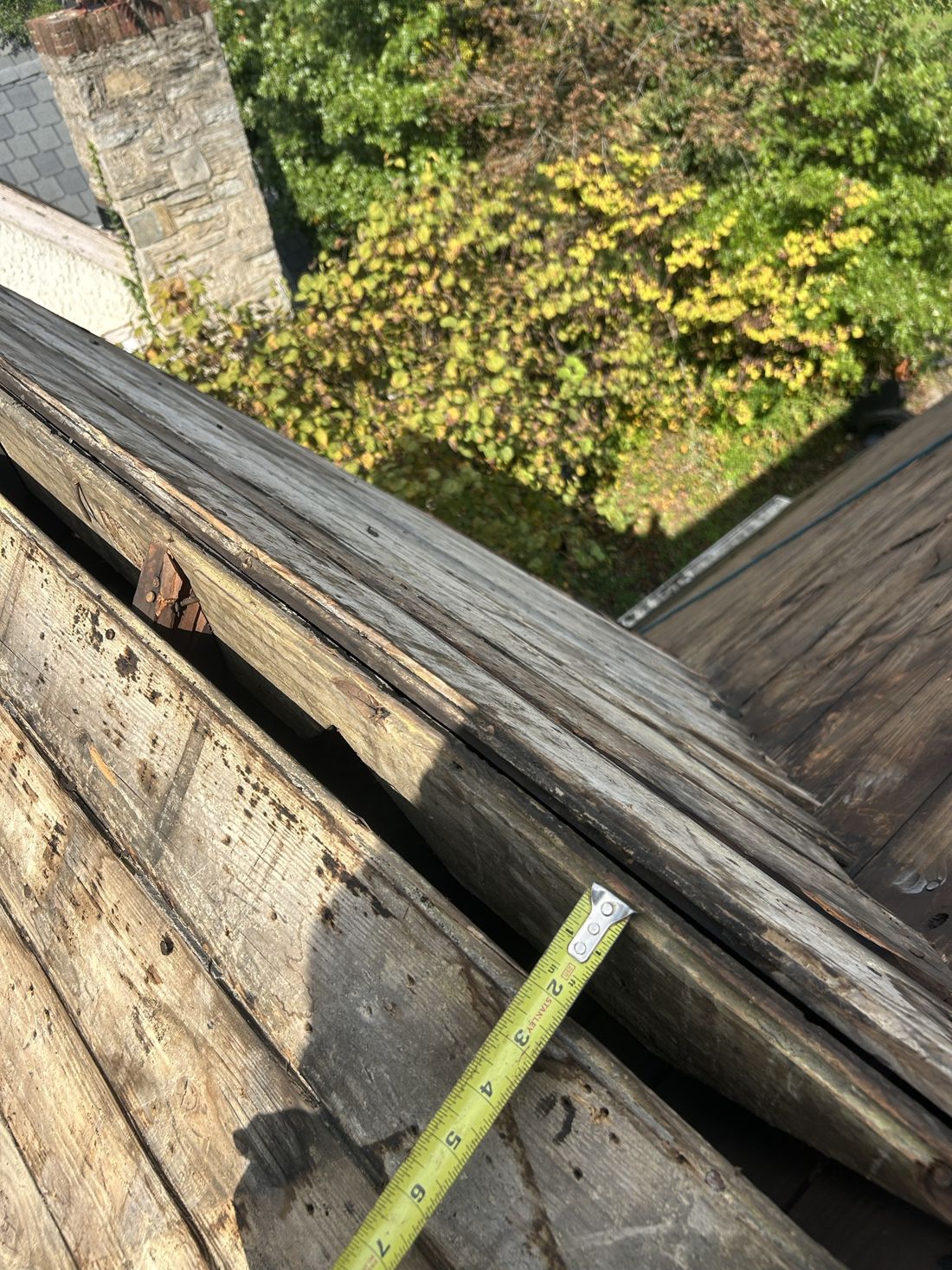
A roofer has two choices. Guess high and build extra decking into every quote, so most homeowners pay for wood they never needed. Or price decking separately and charge only for what's actually replaced. Most reputable roofers do the second, and it's the better deal for you.
How it gets priced: per board
Your estimate or contract should list a price per board for decking. A "board" here means one full 4x8 sheet of new decking. During the install, the crew replaces any bad sections, counts the boards used, and the total is added to your final invoice when the project is complete.
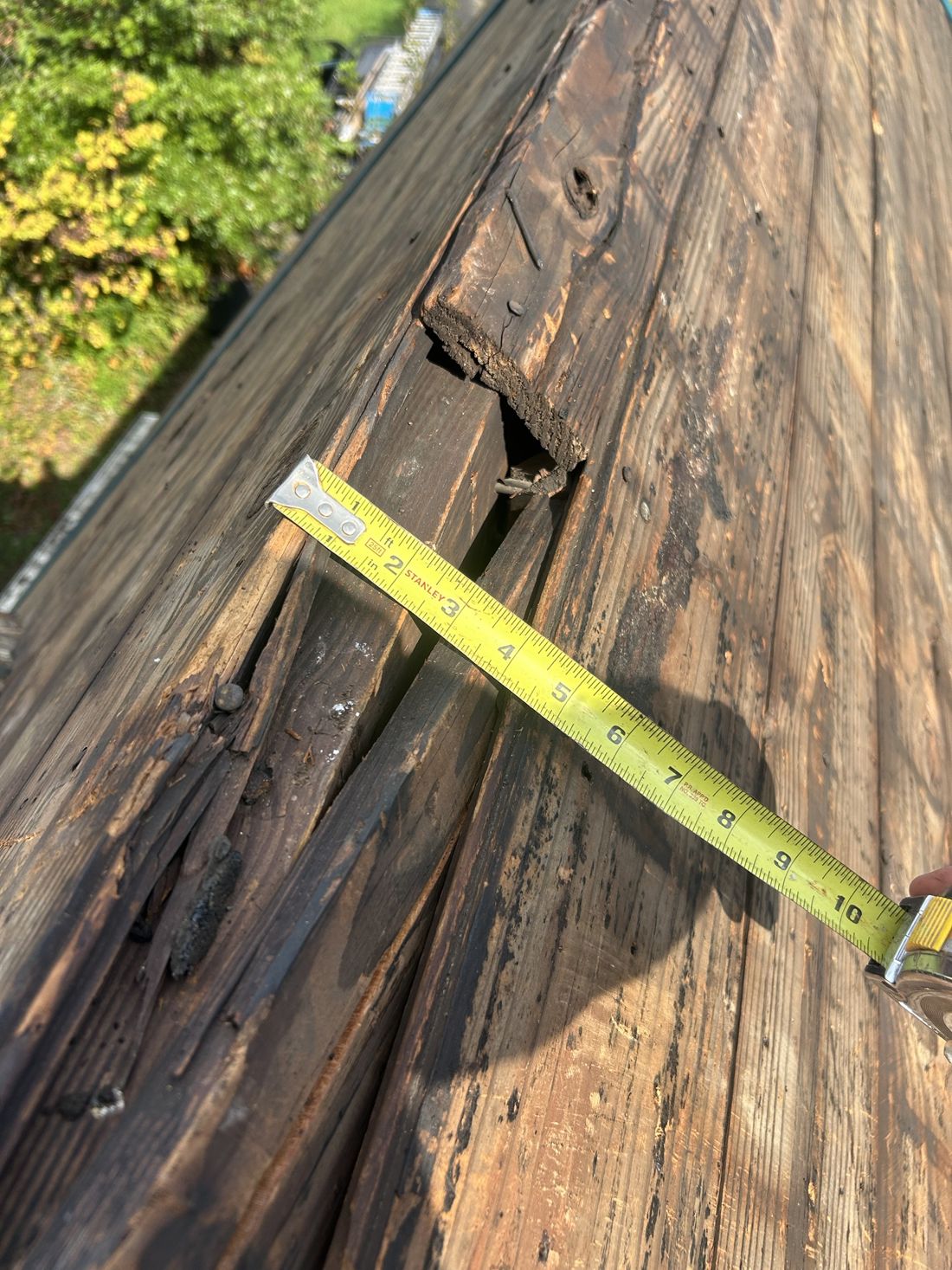
The rule of thumb: 3 boards per square
Roofs are measured in squares. One square is 100 square feet. A 4x8 sheet covers 32 square feet, so it takes about 3 boards to cover one roofing square.
That gives you a quick way to estimate the worst case before you sign. Find the number of squares on your quote, multiply by 3, then multiply by the per-board price on your contract.
| Area replaced | Boards needed (approx.) | Your cost |
|---|---|---|
| A soft spot (half a square) | 1–2 boards | 1–2 × per-board price |
| 1 square | 3 boards | 3 × per-board price |
| 5 squares (one slope) | 15 boards | 15 × per-board price |
| Full 25-square roof | 75 boards | 75 × per-board price |
Most roofs only need a few boards around leaks, valleys, chimneys, and roof edges. A full redeck is less common, but it does happen, especially on older homes with plank decking like the one in the photos above.
What to check before you sign
- Find the per-board price in writing. If your quote doesn't list one, ask for it before you sign. Comparing it across bids is just as important as comparing the roof price.
- Do the 3-per-square math. Know your worst case so a full redeck doesn't catch you off guard.
- Ask for photos of replaced decking. A good roofer will photograph the bad wood before it's covered up and give you the board count with the final invoice.
- Be wary of "decking included." A quote that includes decking either has a cap on how much is covered or has padding built in. Ask which.
What about insurance claims?
Everything above is about retail (cash) replacements. On an insurance claim, decking may be covered when it was damaged by the same storm or when code upgrade coverage applies, and it's often paid through a supplement after the tear-off. For the details, see Is roof decking covered by insurance?
The bottom line
Decking isn't missing from your quote by mistake. It's left out because no one can see it until the old roof is gone. Look for the per-board price, use the 3-boards-per-square rule to estimate your worst case, and ask for photos and a board count on the final invoice.
Shopping for a new roof? Request up to five bids from vetted local roofers and compare per-board decking prices side by side, with no sales pitch.